When I was starting out on my writing career, an agent who interviewed me gave me a piece of very bad advice – he said, ‘Treat writing like a job. Start at nine, work through till five and don’t get distracted.’
Well, maybe that wouldn’t be bad advice for all authors, but it turned out to be very bad advice for me, because it linked time in my mind with productivity, and that made me feel anxious. A whole day with nothing to show for it felt like a waste – and I seemed to have rather a lot of them.
What I had to discover for myself was…
The amazing power of distraction!
Like many other authors, I find that going for a walk is a top distraction which almost invariably leads to little breakthroughs. I can leave the house with my brain striving to conquer a plot problem and stride along for a while, head down, unable to let it go, when suddenly something attracts my attention – a blackbird flying into the hedge, a fox in a field, a child at play. Then my mind lifts away from its plot-worrying completely, and stays that way for the rest of my walk. By the time I get home, a solution has magically appeared.
Switching between writing projects is another fruitful distraction for me. I’ve usually got at least three books at the planning stage, as well as writing new workshops and articles and personal scribblings. Setting my main work-in-progress aside and working on something different means I forget about it completely and then come back to it with new clarity and energy.
Reading articles, having a nap, doing a spot of weeding in the garden… All the things you generally can’t do in a nine to five job can make you more efficient in creative work. Some workplaces recognise this and have chill-out spaces and games rooms for workers to take unscheduled naps and play.
The key is to keep firmly in your mind that these are distractions – that is to say, short breaks from the main endeavour – or you could find yourself snoozing all afternoon or binge watching whole box sets, rather than taking forty winks or watching an episode of your favourite sitcom.
Keep looking away, but keep coming back.
Of course, everybody’s different, and so is every writer. Does nine to five work well for you on writing days, or do you like to harness the power of distraction too?
Donald Maass first came onto my radar as a brilliant writer for writers at a Scattered Authors’ retreat several years ago, when ace children’s and YA author, Linda Newbery, recommended his Writing the Breakout Novel.The premise there is that you can give a good novel bestselling potential by focusing on universal themes, such as ‘the fight for justice’. Those universal themes and archetypes will be there in your writing inevitably on the unconscious level, but Maass encourages authors to see how it feels to put them front and centre.
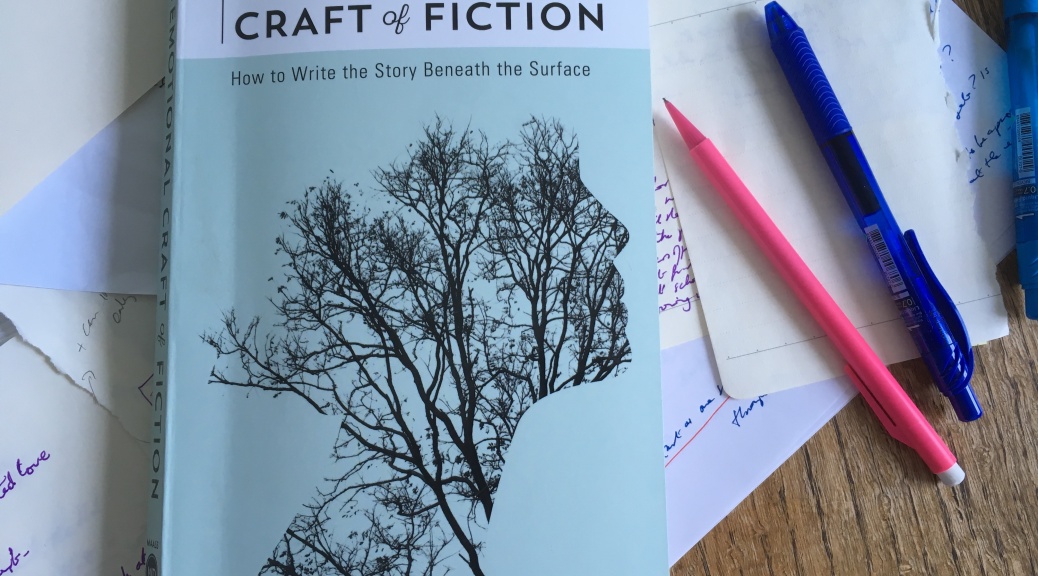
In The Emotional Craft of Fiction: How to Write the Story Beneath the Surface, he looks at plotting, not in terms of action, as a sequence of events, but starting from the deepest psychological needs of the main characters – the inner journey.
Again, this isn’t something writers don’t already know about – we all think in terms of both action and psychological plot – the difference here is that he starts from the inner journey and focuses on that entirely. It’s a question of slightly changing the angle you’re looking at things from.
The book is packed with practical exercises you can apply to your work-in-progress, and those have really helped me define the meaning and importance of what’s going on for my protagonist.
Coincidentally, I noticed The Writing Retreat had a workshop on Finding your Story Through Theme last weekend, and that gave me a chance to simplify and clarify the ideas I was thinking about from Maas’s book. Their retreats are another thing I’d highly recommend!
The Writing Retreat choose great venues too – this one was at Mylor Yacht Club
Thinking in terms of theme helps you decide what action needs to be in the story and what doesn’t contribute enough emotionally, so if your plot is getting in a muddle, it might be helpful to focus more closely on why everything that happens in your story matters.
That will help you get a killer opening and deliver a really satisfying ending too.
I love reading books about writing – and writing about writing. My latest manuscript is a quick read – under 10,000 words in short sections – brief thoughts and insights – and I could really do with a few more beta readers, if possible. Please email me if you’d be up for that, author@jennyalexander.co.ukMany thanks indeed!
Last year, I was writing about recycling as part of my new children’s non-fiction work on helping the planet. As we go into this new year, I’m thinking about recycling again, but this time about recycling writing.
There are lots of ways I do this, and if you haven’t been doing it too, you might be missing a trick.
First, there’s recycling rejected manuscripts. Sometimes a book may be rejected simply because the timing isn’t right. One publisher my agent sent a manuscript to turned it down because she had just accepted one on a similar theme. I bumped into her at a conference a few weeks later, and she advised me to send it again in a year or so. I told her I would redraft it and do just that, but she said, ‘No, don’t change it. Send it just as it is.’
Another story I wrote for younger children was about a rabbit. My agent liked it and sent it out, saying that with any luck we might find a publisher that had a ‘rabbit-shaped gap.’ Rejections don’t always indicate that your work is just not good enough.
Then, there’s writing for different readerships. A lot of non-fiction topics can be adapted for children as well as adult readers , and within that for different ages of children. Stories can sometimes be adapted for different kinds of reader by switching the point-of-view character and seeing the situation through their eyes.
You can also write about the same non-fiction topics for different levels of expertise, from beginners to readers with a similar level of knowledge and experience to your own.
Finally, there’s recycling ideas across different genres. When I’m in the zone with a theme, I usually develop fiction and non-fiction around it at the same time. I always submit magazine articles on the themes of my books as well; they’re easy to write, once you’ve got your ideas clear in your mind through writing the book, and they also help to promote it.
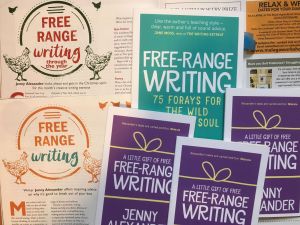
To take that book as an example of recycling, I’ve gone on to write articles about free-range writing for several magazines and now I’ve got a regular monthly column in Writing Magazine, called Free-Range Writing Through the Year.
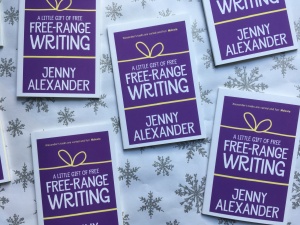
At the time of publication, I issued an ebook taster, with the idea that people might buy and try, and then go on to get the book itself, but that didn’t sell. So I withdrew it from sale, adapted the introduction and end pages, and recycled it into a lovely little stocking filler, A Little Gift of Free-Range Writing.
I’ve also written a talk about being a free-range writer and a free-range writing workshop, that I’ve been touring round the UK.
A few days ago, someone who came to one of these workshops emailed me to say she had developed a magazine article from the ideas she explored in the group, and asking if she should submit it to Good Housekeeping. I straight away thought of all the other magazines she could also pitch it to, using the same idea but adapting it to different readerships. And then perhaps, a book… And more than one book! It could be memoir, how-to, local interest, short story collection, novel…
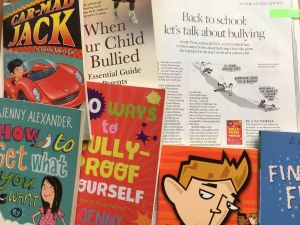
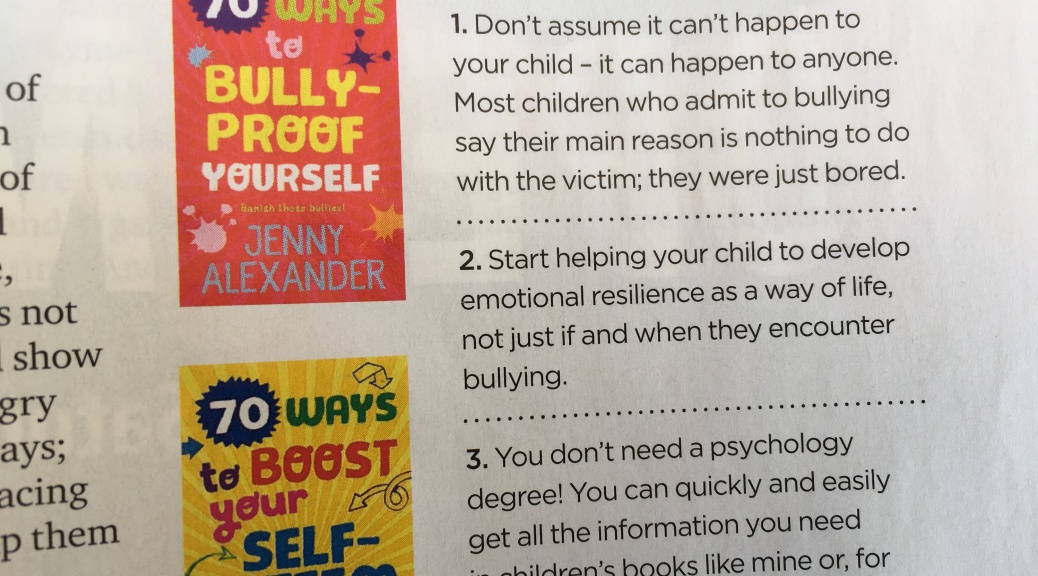
If you write about things that matter to you, then once you’re in the zone, you’ll find there are all kinds of possibilities for the themes and stories you are developing. Writing for different readerships will help you build your profile too. For example, one of the things I’m known for is writing about bullying, because I’ve got fiction, non-fiction and articles about bullying out there aimed at children of all ages, teachers and parents.
So whenever you find a subject that engages you enough to write one piece about it, think about how you might develop and recycle your ideas. It makes sense, both economically and creatively.
Are you already recycling writing? If so, I’d love to hear about it in the comments!
It’s that time of year again, and the great thing about buying presents for writers is that you can give them something that will provide weeks or months of writing pleasure and inspiration without breaking the bank.
Here are some suggestions for things your writing friends might like – or if you’re a writer, why not treat yourself?
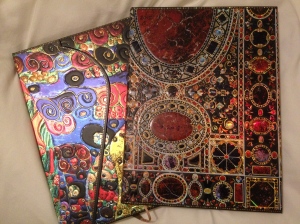
The name says it all, and they really are gorgeous. I’ve been using them for my writing journals for several years now. Great quality unruled paper, beautiful binding, a useful ribbon to mark your place and a handy pocket at the back for bits and pieces.
When I was a student I used to have three biros with me in lectures – one red, one blue and one black. I found that breaking the information down into different blocks of colour helped me to organise my thoughts at the time and remember them later, when I came to revise for exams.
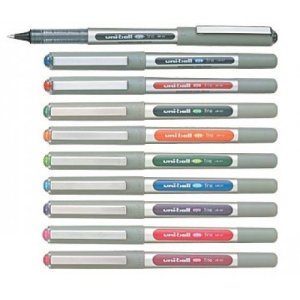
Now, we have gel pens – my very favourite stationery item of all time. They write like a dream and come in every kind of vibrant colour. I use them for all my writing tasks including, of course, my gorgeous notebooks – this year’s is colour coded blue for dreams, red for dream commentaries, black for waking life and purple for books I’m reading.
I’ve tried all sorts of gels over the years, but the brands I keep coming back to are Pentel and Pilot.
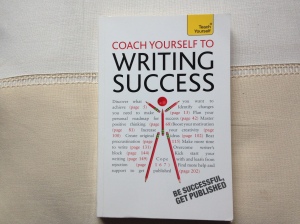
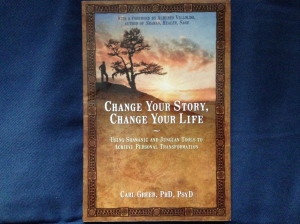
Whatever kind of writing you do, it helps to understand what’s most important to you and create writing goals that fit with your core values. That way, you’re both more likely to succeed and also more likely to enjoy your success when you do. My friend Penny Dolan recommended this book to me some years ago, and I’ve recommended it to other writer friends ever since.
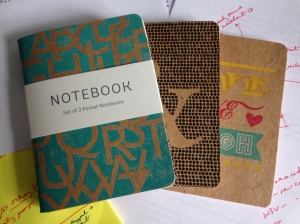
Even in these days of mobile phones, most writers like to carry a notebook somewhere about their person when they’re away from home, and these are perfect – not too big, bulky, or heavy to put in your pocket; soft but not flimsy covers; good quality unlined paper and attractive cover designs.
These definitely fit the bill!
5 A poetry collection
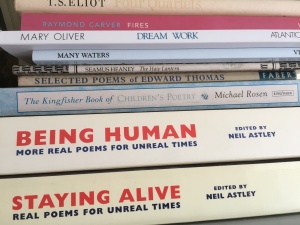
Not just writers, but everybody in the world can find solace, joy, companionship and inspiration in poems. Poetry is very much a question of personal taste, so it might be a good idea to go for a collection such asBeing Human , Being Alive or Staying Alive.
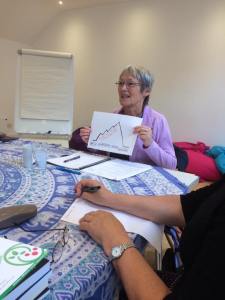
A place on a writing workshop will please your writer friends or writer self, and it’ll be something to look forward to at the end of the Christmas festivities.
I love going on other people’s workshops, and I’ve yet to meet another writer who doesn’t. (I’ve added the link to mine, but you can just google writing workshops in your area to find ones local to you)
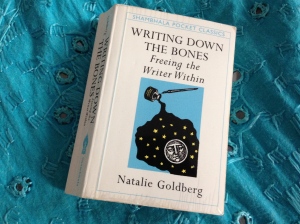
Being a writer isn’t just a way you pass your time – it’s a part of the way you are. Developing a practice of writing is a profound kind of self development, and Natalie Goldberg brings a Buddhist sensibility to it which I love.
This is a fascinating workbook with loads of writing exercises. Not for everyone, obviously, but I really enjoyed it.
9 A day out to somewhere interesting
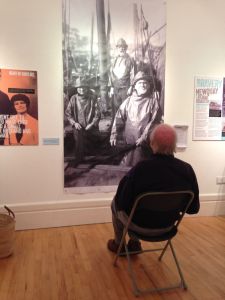
Most writers are more excited by experiences than things, so how about a ticket to somewhere that might spark their imagination, such as a guided city walk or visit to a museum?
10 And finally…
Three companionable books for writers from me, which all include plenty of short creative tasks for you or your writer friends to take refuge in if you need to pace yourselves over the festive period.
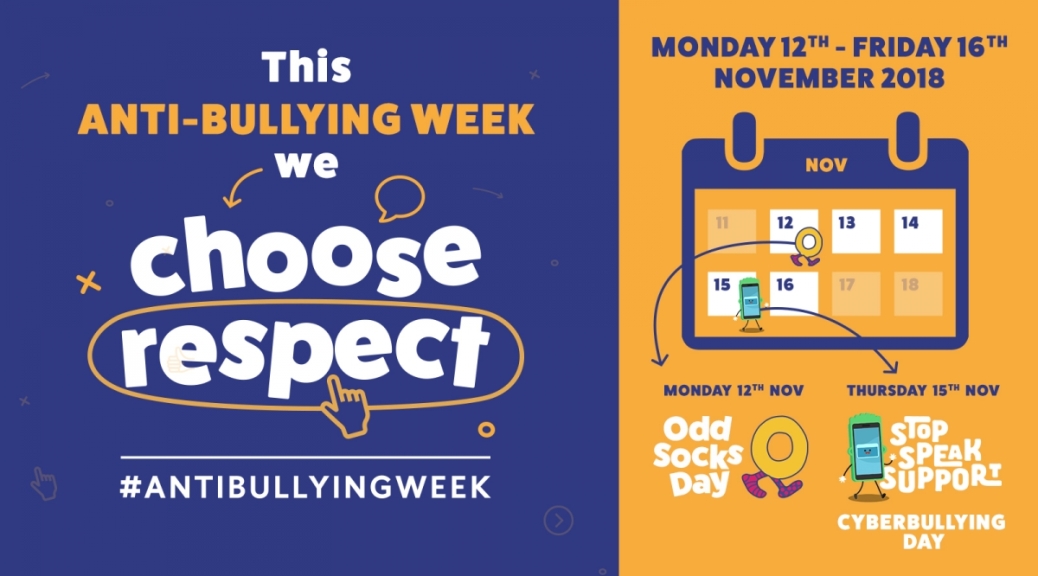
The theme for this year’s Anti Bullying Week is ‘Choose respect.’ I don’t think there’s ever been a time when we’ve needed this message more than we do right now.
Respect is the bedrock of a civilised society. We don’t have to like everybody – we may not be able to help disliking some people – but respect is a choice. We can always choose to behave respectfully.
Most people have always made that choice because incivility was not seen as socially acceptable, but the social norm is slipping because those at the forefront of public life – politicians and the news media – are no longer modelling respectful behaviour.
Leading politicians on both side of the pond are deliberately stirring up and sanctioning the abuse of minorities and the weak for their own ends. Leading news reporters aren’t interested in hearing reasoned argument, but instead choose to bombard interviewees with interruptions and aggressive questioning.
This is the culture our children are growing up in, but if we want them to turn away from bullying they need role models – rules are not enough.
Bullying isn’t just a problem among children in schools. It’s increasingly a social problem for us all, and the key to tackling it is not just focusing on bullying incidents but nurturing a non-bullying environment by making a positive decision at all times to behave with thoughtfulness, kindness and civility towards other people, irrespective of our differences.
I hope the theme for this year’s Anti Bullying Week will be a timely reminder to us all.
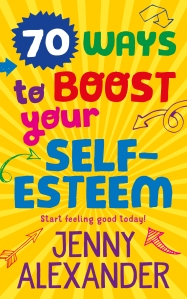
My latest book is included in the new Books for Topics bullying listRespecting other people is an important aspect of self-esteem
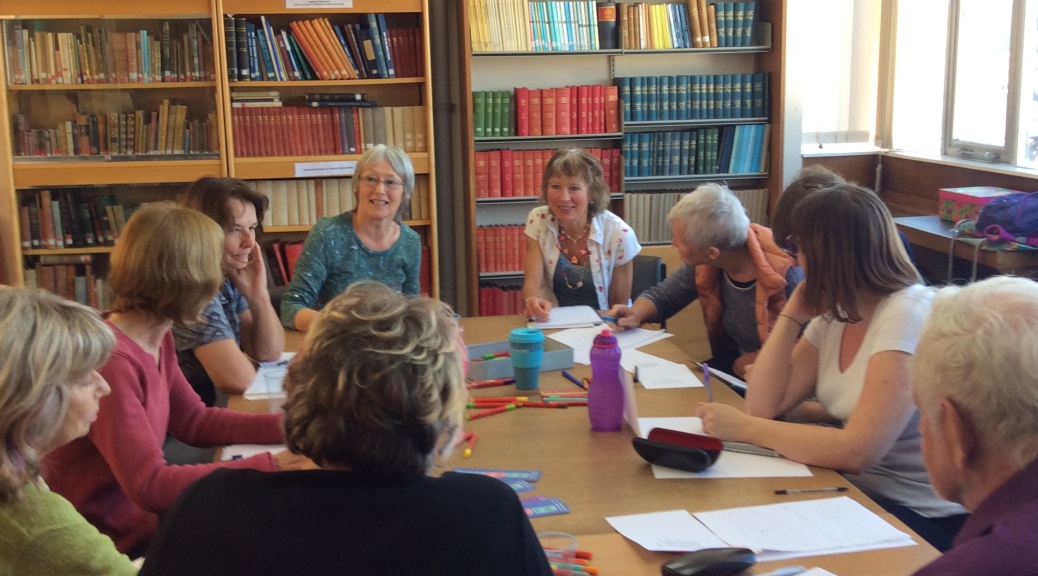
When you talk to non-writers, they often assume there could only be one possible reason for coming on writing workshops, and that’s in order to become a published author. I find this assumption rather odd.
It would be like saying the only reason a person might take piano lessons would be to become a concert pianist or piano teacher, and the only reason for joining a football team would be if you want to be a pro footballer.
My observation as a workshop provider is that it’s a rare participant who signs up because they want a new career. I mean, of course that may be something that develops down the line, just as playing the piano or football might eventually lead to career opportunities if you find that you love it enough to want to practise and practise – but in the first instance, it’s all about pleasure.
Most people come to workshops because they want to see if they’ll enjoy it and, if they do, to build their skills so they can enjoy it even more. It’s about the adventure of trying something new and the joy of learning – which a survey of adults a while ago found many people rated above the joy of sex. True story!
Writing is an opportunity to explore your inner world, to become more aware of everything around you, to find a voice for your thoughts and feelings. It makes life more interesting, more meaningful, more manageable, more beautiful.
The unexpected bonus for people new to workshops is the sense of community that builds very quickly through sharing and discussing writing in a group – lots of new friendships and writing groups begin in workshop situations.
I write for publication but, like almost every writer I’ve ever met, I did loads of writing before I ever thought of being an author and a lot of the writing I do today is experimental and not intended for publication.
There’s the writing, and then there’s the job of being an author. Most people in workshops are there for the writing, though it’s always a buzz when, as a consequence of building their writing confidence, they start to send work off and get things accepted for publication or placed in competitions.
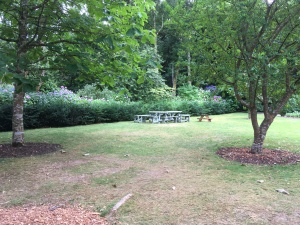
My favourite recent workshop was led by Penny Shutt around the picnic tables at Pinetum Gardens
I personally love going on writing workshops and I take the opportunity whenever I can, not because I want to find new opportunities and ideas for publication but because it’s almost always an enjoyable experience.
Why do you go to writing workshops? Has your motivation changed since the first one you went on?
It’s hard work and, as far as I can see, there are no quick, easy short cuts. But the more you do it, the less challenging it feels, and I’ve actually come to enjoy it. Here’s the 5 point plan that works for me.
1 Choose a good launch datefor the particular book
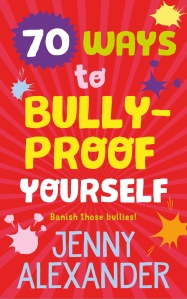
I chose September for 70 Ways to Bullyproof Yourself because lots of parents and children are concerned about bullying at the start of a new school year. I thought that would be a good angle for articles and social media updates around the launch, with the added bonus of Anti Bullying Week coming up soon after for another flurry of promoting in November.
Hashtag #bullying !
2 Try to get some reviews
I always email local magazines and newspapers when I’ve got a new book coming out, offering to send them a review copy. Uptake on this one hasn’t been as good as usual, but influential book blogs are probably even more important these days, and the book got a great review from Pippa Goodhart in Awfully Big Reviews, which is full of great quotables that I can use in twitter and facebook.
Two other influential bloggers, Minerva Reads and Books for Topics have have told me their reviews will be posted around Anti Bullying Week.
Only Peters Booksellers customers get to see what the awesome librarians who review for them have to say, but I think this book must have fared all right because I’ve had several orders already.
3 Pitch some articles
I got an article in the September issue of Devon Life – we didn’t even discuss a fee because they let me include the cover and book details, so it was a win-win – they could view it as a free article, and I as a free one-page ad.
It’s all very time consuming, but I find that pitching and writing articles is a really good way of focusing my ideas about what the book is actually about and why people should read it – the process helps me find the so-called elevator pitch.
4 Get some bookmarks and fliers
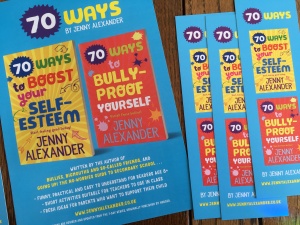
Rachel offers promotional bits and pieces such as this as part of her cover design package, which is wonderful because she can create everything to fit the book’s branding. Everything carries my website address, so it’s like handing out a business card really.
5 Organise some events
I almost always have a launch party to celebrate the publication of a new book, because it feels important to me to celebrate and you can add photos and updates to the buzz you’re trying to build in your social networks, but I just haven’t had time with 70 Ways to Bullyproof Yourself.
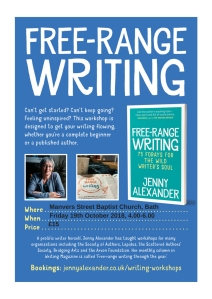
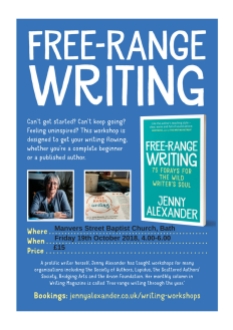
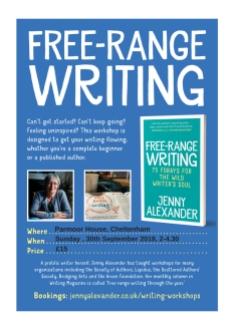
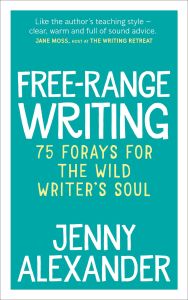
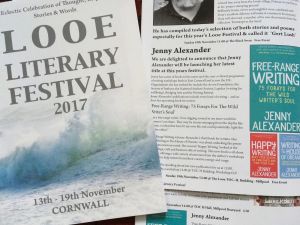
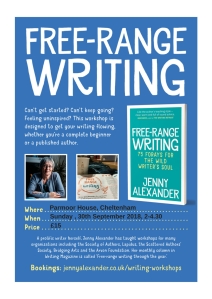
I’ll usually try to do arrange some author talks in my local libraries, bookshops and festivals around launch time too, but that hasn’t happened – same problem. It’s partly because I’m still doing my free-range writing tour to celebrate Free-Range Writing: 75 Forays for the Wild Writer’s Soul – talks and workshops throughout the year just wherever I happen to be (the next ones are in Cheltenham on Sunday September 30th, Launceston on October 10th and Bath on Friday October 19th)
A piece of advice
That brings me to my personal piece of advice for other inde authors around launch time – and most traditionally published authors, come to that, since publishers usually expect you to do most of the promoting yourself.
Make a list of all the possible things you could do, such as publications you could approach for a review or articles you could pitch around the subject, but don’t expect yourself to be able to do it all.
Be able, after a month or two, to ditch the list or cut it right back to anything you still quite fancy doing – I’ve got a few publications that have expressed interest in articles, for example, but I won’t be pitching to new ones.
Promoting a book is stressful and you need to look after yourself, and part of that, for a writer, is looking after your writing.
After several months of focusing on trying to get these two 70 Ways books noticed, I’m letting that be one of my low level background activities and switching my attention back towards starting some new writing projects.
What have I missed in my 5 point plan? New ideas for promoting my next book would be most welcome!
But this time I didn’t want to just stick to my local area – the theme of the book sparked the idea in me that I’d like to go free-ranging around the UK.
I live in Cornwall but I go away a lot for visits to family and friends, meetings and events, and my plan was simply to try and fix up free-range writing workshops in places I was already planning to visit. That way, I could spread my tour across the year and it would be both low stress and light on expenses.
I emailed independent bookshops, libraries and festivals in various parts of the country I often visit; then I waited to hear back. But although I sent out exactly the same proposal as I’d sent out locally, none of the bookshops and libraries outside my area got back to me, except the completely excellent Orkney Library, which is up for an event next time I’m there. (Shout out to Orkney Library for recently celebrating reaching over 50,000 followers on twitter. Be there or be square!)
Orkney Library’s famous balls
I thought my little tour was dead in the water, but then it gradually dawned on me that bookshop and library events are almost always either local authors or else ones with a high profile nationally.
So I wouldn’t be able to get events outside the South West in the normal way, by approaching bookshops and libraries – I would have to approach it from a completely different angle. I had to stop asking myself, ‘What would a publicity department do?’ and, for my independently published books, start thinking like an inde.
So here’s my first tip: Think like an inde
I was booked to teach a workshop in Peterborough for Writing Magazine in April, planning to stay with my sister-in-law in Stamford afterwards, but my first enquiry to the library there had gone unanswered and I’d had a no from the bookshop. However, the bookshop owner had kindly taken the time to suggest I contact the Arts Centre.
Why hadn’t I thought of that? Because I was in traditional book-tour mode, looking for hosting in bookshops and libraries, and not thinking like an inde. I booked a meeting room in the Stamford Arts Centre, sent them a poster to put up on their noticeboard and put the word out via social media.
I decided not to pay for advertising, because then I would have to charge more for places, and I already had to cover room hire. I braced myself for the possibility that I might only get one or two bookings, if I got any at all, and that would leave me out of pocket.
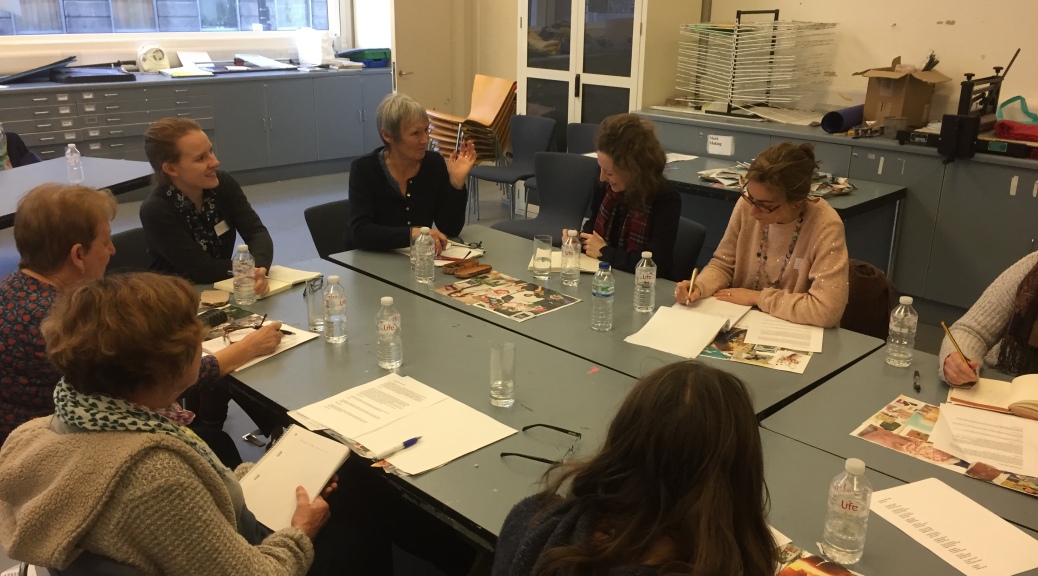
But the workshop was fully booked. Fourteen lovely local writers round the table, and a thoroughly enjoyable session. I’m hoping to provide another workshop there, on a different theme, next time I’m in the area.
I was elated! I set about finding meeting rooms in other towns I would be visiting later in the year. I searched ‘meeting rooms’, but soon became disheartened, because even the smallest ones were really expensive to hire. The world of meeting rooms wasn’t geared up to serve private events for small independents like me.
Tip two: Think like an author
I was ready to give up again when it occurred to me to try a different tack: writing workshops aren’t business meetings – there’s no corporate budget. What’s more, numbers are small and writers aren’t generally known for their high spending power. I searched again, this time not for meeting rooms but for writing groups in the towns I was going to, in order to find out where they held their meetings.
I found that writers’ groups were meeting in cafes and community buildings, pubs and Quaker houses, all at much lower prices than business meeting rooms, and I booked myself some rooms in Cheltenham and Bath, to tie in with my next two trips up-country. Here are the posters.
It’s still scary, because what if no-one comes? But I get a real buzz from teaching these workshops, so I’ll be tweeting and posting on facebook, and hoping for the best.
This approach might not work for all indie authors, but I haven’t got any bestselling ambitions or desire for fame. With all my writing books, articles, blogs and workshops, besides needing to pay my bills, my main aim is to create and participate in communities of readers and writers, and my free-range writing tour is helping me to take that further.
I’ll be looking for venues in Oxford and London soon – does anyone know any cheap, writerly rooms in those cities?
Last week, I wrote about my writing life using those trusty writing prompts – who, where, when, what, how and why. I invited readers to send me their own versions, and was delighted to receive this guest post from Julie Newman. Enjoy!
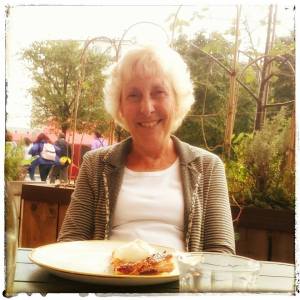
Julie Newman
Who?
I have been writing seriously for 10 years since taking my first course ‘Finding Your Voice’ with Jenny Alexander in Cornwall. I had newly retired and wanted a new project, hoping one day to write my memoir; although at the time this was a distant dream. This course also gave me the confidence I needed to explore other forms of writing and I’ve since had nine articles published with Evergreen and This England magazines. Other writing courses followed, one of which was in conjunction with the Caradon Hill Area Heritage Project. I had a historical short story published in each anthology, ‘Mining for Words’ and ‘Write to Remember’.
Where?
At home in my study mostly. I also take a notebook with me wherever I go, for when inspiration strikes.
When?
Whenever I feel like it. I have no set times.
What?
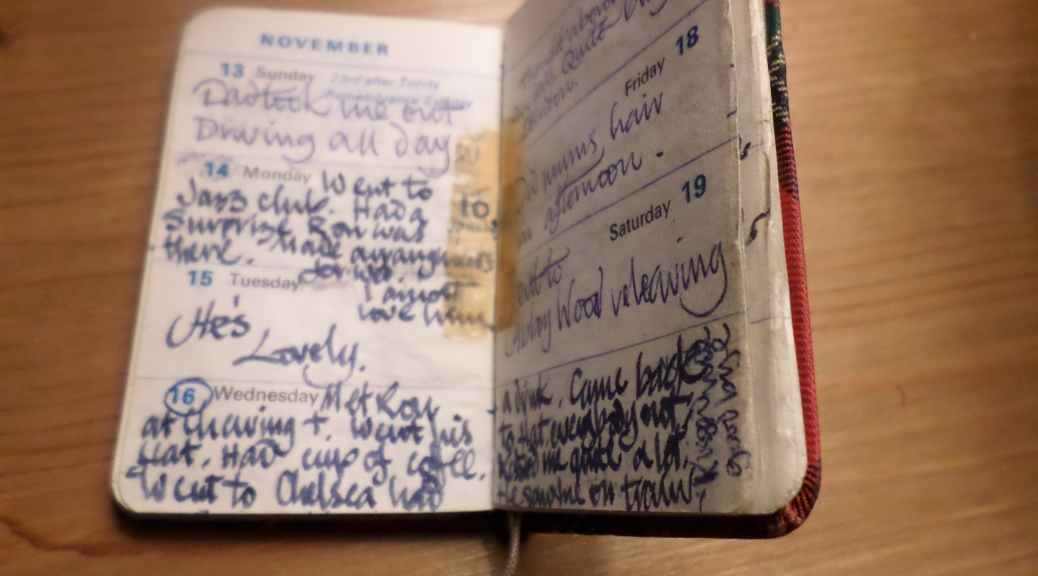
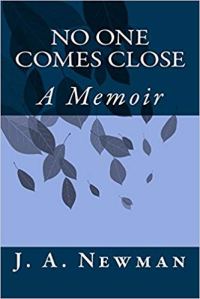
I have just finished rewriting and editing my debut novel. The seed for this was sown one evening during the first writing course I took with Jenny. ‘Where There’s a Will’ is a playful romp through a month in Jess Harvey’s life, a 29 year-old woman with a strapped-for-cash lifestyle who thinks she’s found her Prince Charming in lawyer Giles Morgan. I hope to publish this in the next few weeks. Last September I finally realised my dream and proudly published my memoir ‘No One Comes Close’ which had been twenty years in the making, first in longhand taken from my old diaries and subsequently transcribed into Word and reformatted.
I am now surrounded by books on the 1640s (English Civil War) with a view to writing a historical novel set in the Fens.
Why?
Again, I initially wanted to explore the creative writing process with a view to publishing my memoir one day. But I have got so engrossed in every aspect of writing that now it occupies most of my time!
How?
I took numerous writing courses whilst living in Cornwall and I belonged to four writers’ groups – one in particular I found extremely helpful, not only with feedback on my own work, but I learned a lot through the process of critiquing other members’ work. Since moving to Norfolk and struggling to find writers’ groups in my area, I have recently found and made friends with three other local authors which is great. We often meet up for coffee and chat about our progress. I also belong to various writers’ groups on social media which I find very stimulating.
I’m delighted to see that Julie is free-ranging with her writing too!
If you’ve enjoyed Julie’s article, and would like to share your own responses to the writers’ old friends, who, where, when, what, why and how, please email them to me author@jennyalexander.co.uk
ps The header comes from Julie’s guest post about journalling – you can read it here.
I once went to a writing workshop that had no structure or content – the facilitator came with only two things – a few prompts and the information that to find a story all you need to do is ask the questions: who, where, when, what, why and how?
What surprised me – besides seeing someone lead a 3 hour workshop with no more than that – was that a lot of people in the room had never heard of finding stories by asking questions, so they were actually quite happy customers. (If you haven’t either, have that one on me!)
It reminded me of a questionnaire I filled in for a PHD student who was studying writer’s block, because that was more or less the who, where, when, what, why and how of my writing.
1 Who?
I’m an author with about 25 years experience in writing fiction, non-fiction and magazine articles for all ages. I’ve worked for traditional trade and educational publishers as well as self-publishing under my own imprint, Five Lanes Press.
2 Where?
At home in my study for the actual writing part, but thinking and note-taking at the beach or out and about on the moors – I live in Cornwall and I like to walk and ponder.
3 When?
I don’t have any regular writing times. I might write through the night when I’m on a roll, but then spend several days away from my desk, just musing. A writing session might last anything between 20 minutes and 20 hours with breaks.
In the early days, I had just 2 hours every morning, while my kids were in school/playgroup for writing. That extended to about 5 when they were all in school. I absolutely love not having any regular patterns in my creative life these days, now that they’re all grown up.
4 What?
At the moment, I’m promoting my three books for writers, with a free-range writing workshop tour and a monthly column in Writing Magazine.
I’ve also updated and adapted another one of my out of print children’s self help books – 70 Ways to Bullyproof Yourself, which comes out in September. I’m writing articles and and putting together a blog tour for that.
My children’s book on helping the planet is finished and looking for representation – I’ve sent it to an agent. If I can place it, I’ll write one about healthy living next year for the same age group.
5 Why?
One of my main drives as a writer is sharing the useful stuff I’ve learnt just through living. I think of myself as writing in an elder tradition.
6 How?
I’m a stationery junkie. I love coloured gel pens and an assortment of different papers. I can’t work with music or any other kind of background noise, so it’s just as well I have very considerate neighbours.
I’ve never taken any kind of formal writing course, but I go to other people’s workshops sometimes because I enjoy them. If I want to try a new kind of writing project, I’ll read the latest books in the genre and try to figure out how they work – then I experiment.
I love reading books about writing. Some of my favourites are Nathalie Goldberg’s Writing Down the Bones, Donald Maass’ Writing the Breakout Novel, Christopher Vogler’s The Writer’s Journey and Ted Hughes’ Poetry in the Making. I recently enjoyed Dani Shapiro’s Still Writing too.
What’s the story of you as a writer – your who, where, when, what, why and how? Email me if you’d like to do a guest post here in the House of Dreams.






 Jenny Alexander's blog: Writing in the House of Dreams